South Asia is a unique region that is home to both pre-agricultural hunter-gatherers, e.g., Birhor, Korwa and Chenchu, and some of the most developed sectors of the modern world, i.e, the software hubs and space sciences. Very rarely does it happen that speakers of the same language/s (e.g. Hindi, Telugu, Kannada, Malayalam or one of its variants) can `communicate' with communities from both ends of human history. The simultaneous presence of different ages of mankind, in a way, coupled with cultural `continuities´, makes the South Asian experience one of the unique `inventories´ of responses (successful, unsuccessful, or unintended repercussions thereof) to various challenges in its long history.
The South Asian Studies Research and Training Collective (SASRTC), an informal group of scholars and experts from India, Europe, and North America, will explore different aspects of South Asian history and society. By drawing upon historical and contemporary examples, social formations, and communities, the Collective will highlight how many of the solutions now proposed for global and regional crises have, in fact, already been attempted or implemented at various points in time and in regions in Bangladesh, Bhutan, India, Maldives, Nepal, Pakistan, and Sri Lanka.
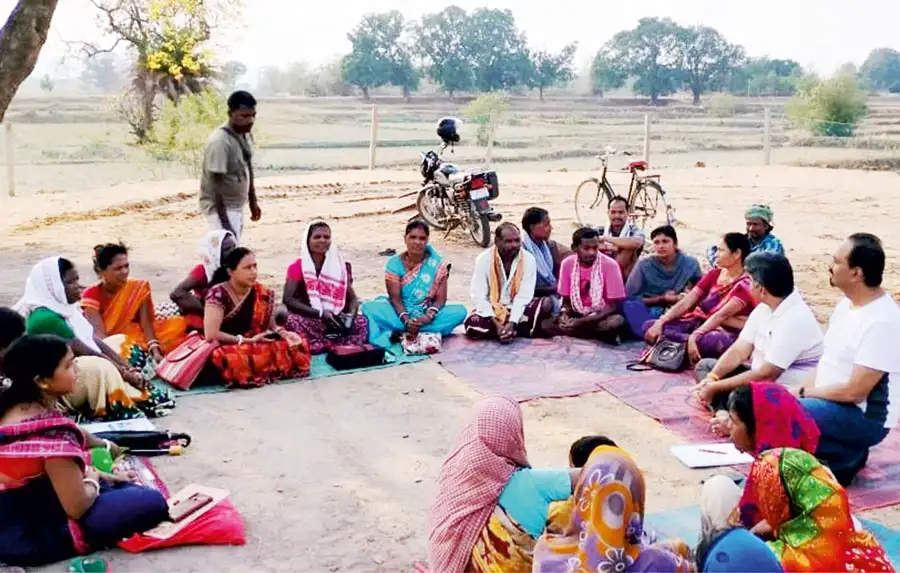
One of the greatest gaps in today's global discussions is the widespread ignorance about the many 'South Asias. Unlike mainstream societies, there are communities where wanton destruction of nature is not practiced and where caste, patriarchy, and untouchability are either absent or far less pronounced. For instance, India's Adivasi communities, who make up about 6 to 8 percent of the population, are notable for being free from practices such as dowry deaths and honour killings.
Problem-and-Solution-Approach South Asian Studies does not claim to offer direct solutions to global challenges, but concrete historical examples from the region can add new depth and dimensions to ongoing discussions.

Bhutan offers a distinctive example of sustainable development, having achieved negative carbon emissions while adopting Gross Domestic Happiness (GDH), rather than per capita income, as its principal measure of progress. This approach illustrates both the potential and the limitations of alternative development paradigms and thus holds broader relevance for global debates on well-being and sustainability.
The Maldives presents another critical case: confronted with the existential threat of rising sea levels due to global warming, the country has pursued innovative adaptation strategies, including the construction of “floating islands.” Yet these efforts also underscore the precarious position of small island states, whose very survival is at stake in the context of accelerating climate change.
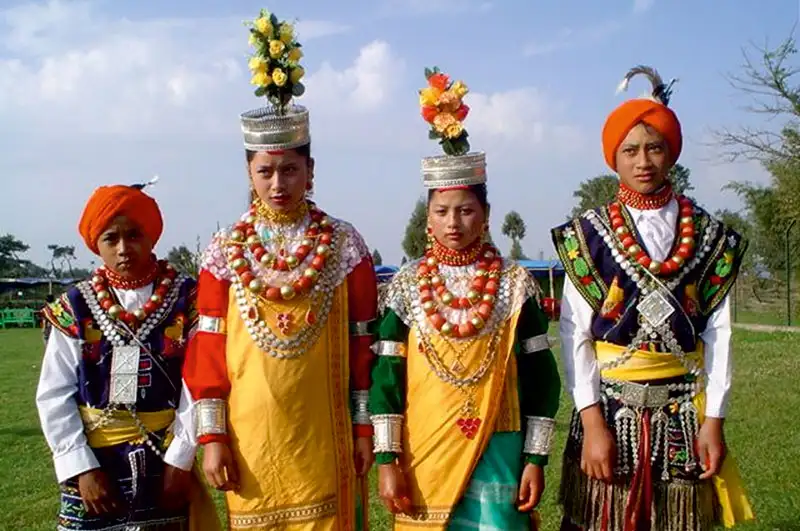
Among the matrilineal Khasis of Meghalaya, India, the youngest daughter inherits the family property, and children are named after the mother, not the father. In the Bhagoriya Mela of Rajasthan and Madhya Pradesh, young couples of the Bhil tribe may elope, and there are no honour killings.
Did you know that four of the world's eight major religions originated in South Asia? The core teachings of Buddhism and Jainism, for example, reject both gods and the authority of the Vedas. Some South Asian traditions also question the idea of an eternal, unchanging soul or the need for a single holy book. Such perspectives challenge the standard definition of 'religion.'
Ram Dayal Munda narrates the story of voluntary reduction of the use of iron technology by the Asur community and its celebration in its epics and rituals in Adi Dharam (2014) and Sosobonga (2015). Imagine that something similar takes place today in the case of Artificial Intelligence, Genetic Engineering or Nanotechnology.
Can Janko festivities of Nepal, the collective celebration of growing old, answer the crisis of Kodokushi of Japan, where oldage members of the society die alone?
Bob Black's re-emergence of Alpha, Beta, Delta, and Gamma-based hierarchy in the technologically advanced society of Brave New World by Aldous Huxley reminds us of the reincarnation of the caste system. Detlef Kantowsky points out that many key ideas of Aldous Huxley´s magnum opus were inspired by his readings of ancient texts from India.
Scholars, poets, activists, and experts from many different backgrounds will come together to share what makes their fields unique and meaningful. Drawing on experiences from tribal societies, science fiction, politics, language and literature, the caste system, history, and new ways of thinking like anti-anthropocentrism and de-domestication, they will explore how these perspectives can help us face today's global challenges.

Department of Linguistics and Philology Uppsala Universitet, Sweden
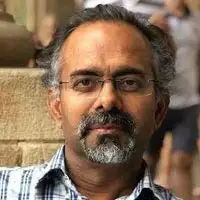
Department of Indology, University of Tübingen, Germany, and Zürich University, Switzerland

Department of Modern South Asian Languages and Literatures South Asia Institute, Universität Heidelberg, Germany
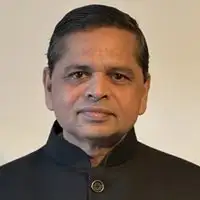
Asian and Middle Eastern Studies University of Cambridge. England

Centre for Political Studies
Jawaharlal Nehru University, New Delhi

Prime Ministers' Museum and Library, New Delhi

Founder, Draupadi-Verlag, Germany
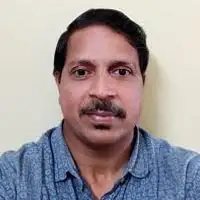
Department of International Relations and Politics, Central University of Kerala, Kasaragod, Kerala.

Birla Institute of Technology and Science, Pilani

Journalist, Poet, and Activist West Singhbhum district, Jharkhand

Poet of Kokborok and the English language Social Activist, Agartala, Tripura
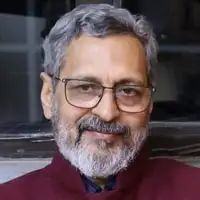
Centre for Political Studies, School of Social Sciences Jawaharlal Nehru University, New Delhi.
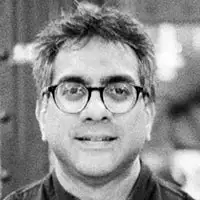
Centre for Justice Studies, O. P. Jindal Global University, Sonipat, Haryana

Centre of Russian Studies, School of Language, Literature and Culture Studies Jawaharlal Nehru University, New Delhi

Department of English, Texas State University, San Marcos, Texas, United States

Chairman
Amity University Lucknow Campus

Pro Vice-Chancellor
Amity University Lucknow Campus

Professor & Director
Amity School of Languages
Amity University Lucknow Campus
Contact: 0522-2399500(Extn.1178)
Email ID: kkray@lko.amity.edu
Department of Indology,
University of Tübingen, Germany,
and Zürich University, Switzerland
Email ID: divyaraj.amiya@uni-tuebingen.de

Assistant Professor
Amity School of Languages
Amity University Uttar Pradesh, Lucknow Campus
Contact: +91 99198 63256
Email ID: ssrivastava2@amity.edu

Assistant Professor
Amity School of Languages, AULC
Email ID: bsarkar1@lko.amity.edu
Contact: +91 96705 40247
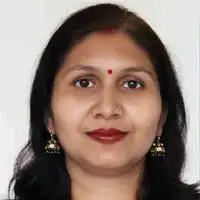
Assistant Professor
Amity School of Languages, AULC
Email ID: tmishra@lko.amity.edu
Contact: +91 96964 03933

Assistant Professor
Amity School of Languages
Email ID: ryadav5@lko.amity.edu
Contact: +91 98078 21846

Assistant Professor
Amity School of Languages
Email ID: rsrivastava5@lko.amity.edu
Contact: +91 87654 53899

German Trainer
Amity School of Languages, AULC
Email ID: nsinha@lko.amity.edu
Contact: +91 90057 66990

Assistant Professor
Amity School of Languages, AULC
Email ID: fsyed@lko.amity.edu
Contact: +91-95110 51042
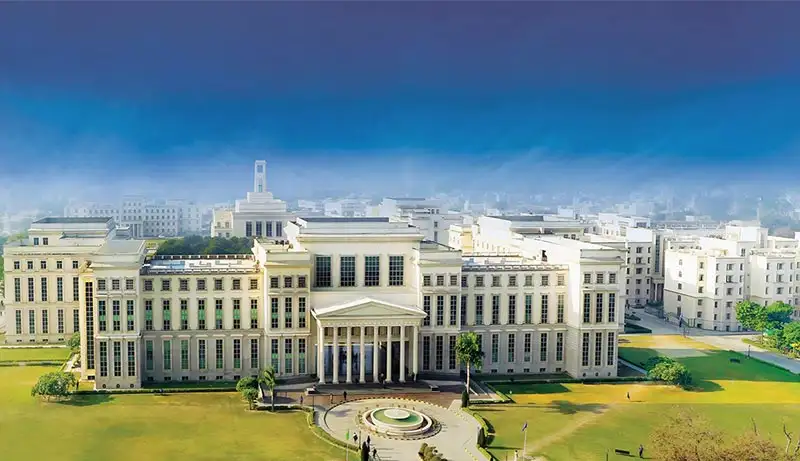
Amity University Lucknow Campus, Uttar Pradesh, is built on a foundation that embodies the qualities that have made Amity Institutions world-class over the last two decades. Amity has established global education, training, and research standards, complemented by world-class infrastructure and the latest teaching methodologies. With the mission to train future corporate leaders, the University strives to blend modernity with tradition in each of its students.