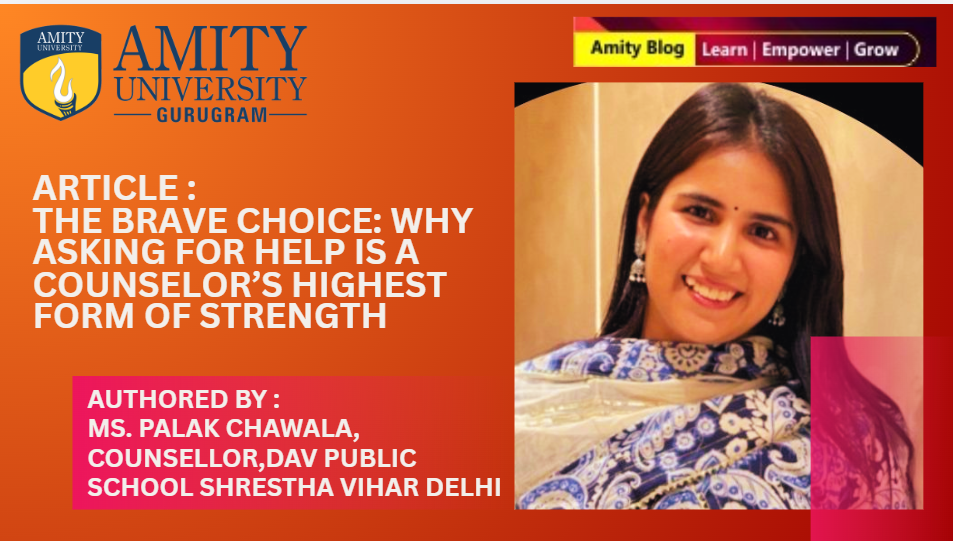
The Brave Choice: Why Asking for Help is a Counselor’s Highest Form of Strength


Choosing a Career: What Students Should Consider Beyond Trends In an age where careers are often shaped by social media narratives, coaching-centre advertisements, and peer pressure, students are increasingly encouraged to follow what is popular rather than what is suitable. Terms such as artificial intelligence, data science, management, and start-ups dominate conversations around success, creating a narrow definition of achievement.
While trends reflect changing economic realities, choosing a career solely based on them can lead to dissatisfaction, stress, and instability. Students in India and across the world must therefore look beyond trends and adopt a more thoughtful, long-term approach to career planning. Trend Pressure and Its Consequences In India, career decisions are frequently influenced by societal expectations and perceived job security.
Engineering, medicine, and management continue to attract students irrespective of individual aptitude or interest. As a result, educational institutions report rising cases of academic stress, disengagement, and mental health concerns among young learners.
This phenomenon is not limited to India. Globally, countries such as the United States, Japan, and South Korea report high levels of burnout among professionals in high-demand sectors like technology and finance. These examples underline a critical reality: a trending career may offer financial rewards, but it does not guarantee professional satisfaction or personal well-being. The Importance of Self-Awareness A sustainable career choice begins with self-awareness.
Students need to understand their strengths, interests, and working styles before committing to a particular path. Asking questions such as “What kind of work motivates me?” or “What skills come naturally to me?” is essential. For instance, students with strong communication and creative abilities may find fulfillment in education, media, psychology, or social sciences—fields that are often undervalued in comparison to conventional professions. Ignoring such inclinations in favour of popular choices can lead to long-term dissatisfaction.
Internationally, education systems in countries like Germany and Switzerland encourage early exposure to vocational training and apprenticeships. These models allow students to experience real work environments before making permanent decisions, reducing the gap between education and employment—an area where India is gradually progressing. Purpose Beyond Paychecks Today’s students increasingly seek meaning and impact in their work.
Careers in education, healthcare, environmental sustainability, and social development are gaining relevance, especially in a world facing complex social and environmental challenges. In India, young professionals are contributing to education reform, public health initiatives, and grassroots innovation. While these careers may not always offer immediate financial benefits, they provide long-term growth, leadership opportunities, and a strong sense of purpose.
Globally, similar trends are visible in sectors such as public policy, international development, and non-profit work. These examples reinforce the idea that success should be measured not only by income, but also by contribution to society. Preparing for an Uncertain Future The nature of work is changing rapidly due to automation, artificial intelligence, and globalisation. Many jobs that exist today may evolve significantly in the coming decades. In this context, adaptability becomes more important than chasing the latest career trend.
Students should focus on building transferable skills such as critical thinking, communication, problem-solving, and lifelong learning. These competencies enable individuals to adapt, reskill, and transition across industries as required. International employers increasingly prioritise flexibility and learning ability over narrow specialisation. India’s education system, too, is beginning to recognise the importance of holistic skill development alongside academic knowledge.
Work-Life Balance and Well-Being Career choices also shape lifestyle and mental health. High-pressure professions with long working hours may suit some individuals but can lead to burnout for others. In India’s metropolitan centres, young professionals often experience intense work demands early in their careers. Countries such as Denmark and the Netherlands consistently rank high in global happiness and work-life balance indices.
Their work cultures emphasise employee well-being, flexibility, and productivity without excessive stress.
These models highlight the importance of considering quality of life alongside career ambition. Shared Responsibility: Families and Schools Families and educational institutions play a crucial role in guiding students. While parental guidance is valuable, students must be encouraged to explore diverse career options and make informed choices. Open dialogue among parents, teachers, and students can help align aspirations with individual strengths and realities.
Conclusion Choosing a career is one of the most significant decisions in a student’s life. While trends can offer direction, they should not dictate choices. Careers built on self-awareness, purpose, adaptability, and well-being are more resilient and fulfilling in the long run. For students in India and globally, true success lies not in following the crowd, but in choosing a path that aligns with their abilities, values, and aspirations.

Copyright © 2026 amity university | All rights reserved.