The Brave Choice: Why Asking for Help is a Counselor’s Highest Form of Strength

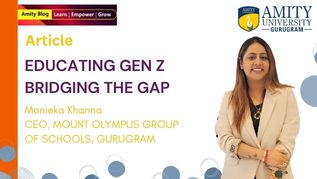
These days Gen Z is described as confident, curious, restless, digital generation and confused. As educators we must pause and ask , Is the confusion theirs, or is it a reflection of an education system which is still catching up with a rapidly changing world?
Today’s learners are growing up
in a time with more information, opinions, technology, and opportunities. Yet
many feel unheard, anxious, and unsure of direction. The challenge is not lack
of capability; it is the gap between how Gen Z learns and how education is
traditionally delivered. GEN Z is quoted
as “Confused “, but when we all cant understand them then we are not allowed to
label them.
The National Education Policy
2020 offers a progressive vision. It speaks of holistic development,
flexibility, multidisciplinary learning, and student well-being. However,
policies do not create change on their own. Mindset and execution do which is
where we lack as system. There are tools and means available which we If adapt
with our complete mindset change, we can easily bridge this gap. But we are
still figuring out whether our experience is better than their new ideology.
Understanding the Gen Z Challenge
-
One of the biggest challenges Gen
Z faces is overexposure without interpretation. Access to information is
unlimited, but guidance on processing, prioritising, and applying knowledge is
limited. This often leads to comparison, pressure, and early burnout.
Another challenge is the
disconnect between learning and life. Many students silently question the
relevance of what they study. When there I no relevant answer of “ WHY” Child
feels detached and engagement drops .
Equally significant is emotional
overload. Anxiety, fear of failure, and constant performance pressure have
become common experiences rather than exceptions. Academic success is still
measured narrowly, while emotional intelligence and resilience receive far less
attention.
Lastly , Gen Z is growing on individuality and choice, yet learning environments still remain rigid and standardised.
Bridging the Educational Gaps -
The first and the most important
shift must be listening. Gen Z wants to be heard, not constantly corrected.
When students are invited into conversations rather than confined to
instructions, their learning becomes meaningful and engaging.
The second shift is towards
purpose-led education. Subjects must connect to life skills—critical thinking,
collaboration, adaptability, ethics, and problem-solving. When Education will
change from what to learn to why it matters, a lot of gap will be filled.
Third, the system must prioritise
mentorship over monitoring. Students do not need more assessments alone; they
need adults who guide, support, and help them both academically and emotionally.
My simply believe that we have to
change our way of thinking ,education
must ignite clarity, confidence, and inner purpose. Before students are asked
to compete, they must be allowed to understand themselves.
Gen Z does not need fixing. They
need trust, relevance, and direction. When education becomes human-centred
rather than outcome-obsessed, learning deepens naturally.
The real success of NEP will not
be measured in documents or frameworks,
but in classrooms where students feel safe to question, fail, grow, and evolve.
“Because when education listens, learning responds and that is where the future truly begins”.
Copyright © 2026 amity university | All rights reserved.