The Brave Choice: Why Asking for Help is a Counselor’s Highest Form of Strength

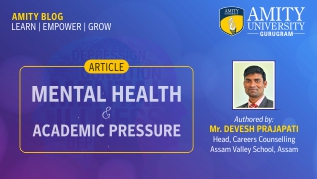
Do you know what mental health and
academic pressure mean? Let me explain these concepts briefly.
Mental Health
– According to the World Health Organization (WHO), mental health is a state of
mental well-being that enables people to cope with the stresses of life,
realize their abilities, learn and work well, and contribute to their
community. It has intrinsic and instrumental value and is a basic human right.
Academic Pressure
– According to Mental Health Center for Kids, academic pressure refers to the
tension, discomfort, and emotional strain caused by pressure from school,
family, and society during the learning process.
I am writing to you about issues and
challenges we face in our day-to-day lives due to continuous competition with
ourselves, society, peers, and the world around us. Academic pressure does not
begin only after Grade 10 or Grade 12; in many ways, it begins very early in
life as we learn to face challenges and expectations. I once read a quote that
stayed with me: “Survival belongs to the fittest, and growth comes from
challenging one’s own willpower to achieve life goals.” However, when
misunderstood, this idea can create unnecessary mental pressure that often
remains hidden from the outside world.
Every individual faces some form of
pressure to survive and succeed. From the moment we are born, we begin dealing
with challenges—initially protected by the care and support of our parents. As
we grow older, these challenges increase in number and complexity. Gradually,
expectations related to academics, performance, and future careers begin to
create significant pressure. This pressure directly affects students’
well-being, emotional health, and overall growth.
Today, a large number of students face
mental health concerns linked to academic pressure. But why does this happen?
Is it always necessary? Academic performance does matter to some extent, but
the problem arises when marks become the sole measure of success. Often,
pressure originates from home, society, and constant comparisons—beliefs such
as “only good marks guarantee success” or “poor performance means failure in
life.” These labels and expectations can deeply affect students’ mental
well-being and create unnecessary stress.
The dialogue from the popular movie “3
Idiots” perfectly reflects this reality:
“Kandhon ko kitaabon ke bojh ne
jhukaya…
99% laaoge toh ghadi, warna chhadi…
Concentrated H2SO4 ne poora bachpan jala daala.”
This dialogue highlights how excessive
academic pressure can overshadow childhood and personal growth.
Recent studies underline the
seriousness of this issue. According to the WHO, nearly 1 in 7 adolescents
globally experience a mental health condition, with anxiety and depression
being the most common. UNICEF reports that academic stress is one of the
leading contributors to adolescent anxiety worldwide. In India, the National
Crime Records Bureau (NCRB) has repeatedly highlighted that academic stress and
examination-related pressure are significant factors contributing to student
distress. These statistics remind us that mental health challenges among
students are real, widespread, and must be addressed with care and sensitivity.
The important questions now are: How do
we deal with this issue? How can students manage academic pressure effectively?
Who can support students during such situations?
The answer begins with you—the
students. With the right mindset, awareness, and support, you can learn to
manage pressure in a healthy way.
As a teacher and counsellor, I would
like to share a few practical steps to help you handle mental health challenges
and academic pressure:
First,
identify your life goals, personal objectives, and sources of happiness. If you
find this difficult, seek guidance from parents, teachers, peers, or trusted
friends. Reading and exploring different career perspectives related to your
subject choices can also help.
Second,
understand the requirements needed to achieve your goals—academic grades,
co-curricular involvement, sports, public speaking, and exposure opportunities
such as IAYP, Round Square, MUNs, and other developmental programmes.
Third,
identify the entrance examinations or qualifications required for your chosen
career or institution.
Fourth,
break your syllabus and preparation into small, manageable targets. For
example, students aspiring to become doctors, engineers, or civil servants
(IAS/IPS) must prepare for competitive examinations such as NEET, JEE, or UPSC.
These exams are undoubtedly challenging and often lead to sleepless nights,
fear of failure, anxiety, and mental stress. However, systematic and consistent
preparation can significantly reduce this burden.
Completing an entire syllabus in a
short time is difficult, but working regularly with discipline and balance
makes the process manageable.
Fifth,
solve previous years’ question papers and revise them again and again. This
practice helps you understand the examination pattern, identify frequently
asked topics, improve time management, and reduce fear of examinations. Regular
revision combined with repeated practice builds clarity, confidence, and
excellence, gradually leading to expertise in your subjects rather than
short-term memorisation. Alongside academics, it is equally important to engage
in daily life activities, skill development, and personal interests.
Students are encouraged to follow these
steps for any academic or career preparation and to develop regular reading
habits. Some recommended readings include 11 Rules for Life by Chetan
Bhagat, Energize Your Mind by Gaur Gopal Das, and The Four Agreements
by Don Miguel Ruiz.
Remember, no student is inherently weak
or strong. Everyone has potential; the process and pace of learning differ for
each individual. Success looks different for everyone. What matters is
recognizing your strengths, understanding your happiness, and defining growth
on your own terms. Ultimately, you are the most important person in your
journey.
Always remember that your parents, teachers, friends, peer group, and society are not your enemies—they are your support systems. Seek their guidance whenever needed. With the right direction, positive mindset, and healthy attitude, you can face challenges with confidence and resilience.
***


Copyright © 2026 amity university | All rights reserved.