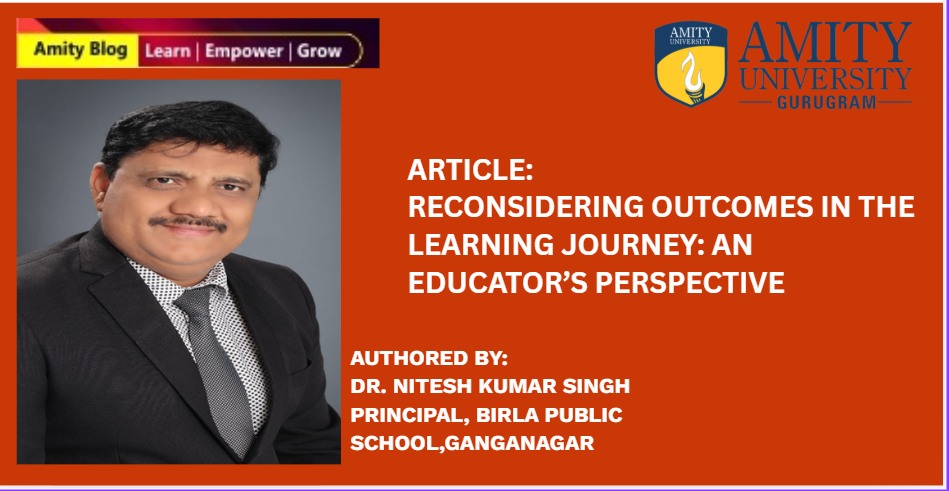
The Brave Choice: Why Asking for Help is a Counselor’s Highest Form of Strength

In the dynamic
and demanding environment of school education, academic results often become
defining moments for students and their families. As a school principal, I have
observed that while strong outcomes reinforce confidence, results that do not
meet expectations can significantly affect a learner’s motivation and
self-belief. Such moments require careful educational response, as they
influence not only immediate academic decisions but also a student’s long-term
relationship with learning.
Academic
assessments play an essential role in monitoring progress and identifying
learning gaps, yet they represent only one dimension of a student’s
development. Performance in examinations is shaped by multiple factors,
including emotional state, assessment design, and learning environment. The
National Education Policy (NEP) 2020 acknowledges these limitations and
emphasizes a shift towards holistic, competency-based education that values
understanding, application, and continuous growth over isolated outcomes.
When outcomes
fall short, students often experience anxiety and self-doubt, particularly in
systems where academic achievement is closely linked to personal worth. NEP
2020 rightly places student well-being and mental health at the centre of
educational reform, recognizing that meaningful learning cannot occur under
excessive pressure. Schools therefore have a responsibility to create
supportive environments where students feel secure enough to reflect on
setbacks and regain confidence.
Learning
trajectories are rarely uniform. Students enter classrooms with diverse
backgrounds, learning styles, and levels of preparedness. Some respond well to
traditional assessment formats, while others demonstrate understanding more
effectively through experiential and application-based learning. NEP 2020
promotes pedagogical flexibility and varied assessment practices to address
this diversity, ensuring that outcomes are used to guide instruction rather
than define capability.
From an
institutional perspective, periods of academic disappointment must be addressed
with structured guidance rather than corrective urgency. Constructive feedback,
strengthened foundational understanding, and the development of skills such as
critical thinking, communication, adaptability, and digital literacy are
essential. These competencies, strongly emphasized in NEP 2020, enable students
to navigate academic challenges and prepare for evolving future pathways.
Aligned with the vision of NEP 2020, education must move beyond outcome-centric evaluation and embrace learning as an evolving process. When results do not meet expectations, they represent not an end but a critical point of guidance—one that, when addressed thoughtfully, strengthens resilience, reinforces self-belief, and upholds the true purpose of education.

Copyright © 2026 amity university | All rights reserved.