- Call : 0120-4392971
- rmehta2@amity.edu
- J1 Block, Room No. 214, Amity University, Noida-201313
Message by the Director
- Home
- Message by the Director
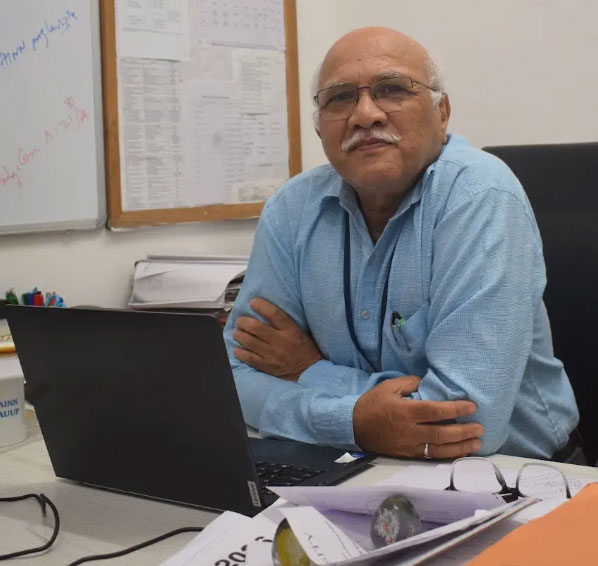
Prof. (Dr.) Birendra Nath Mallick
Director and ProfessorLearning, unlearning, and creativity are essential components of survival. Evolved species, including humans, use a complex nervous system, including the brain, to experience, learn, and unlearn about the surroundings, and may become creative for efficient and optimal utilization of resources for healthy survival. In addition to responsiveness to stimuli, complex evolved species (including humans) with brains also possess cognition and conscious states, which may modulate responsiveness. Our ancient Vedic and Upanishadic scriptures do not explicitly use the modern anatomical term "brain," but they frequently discuss mind (manas), intellect (buddhi), and consciousness (atman) while philosophically discussing the concepts of cognition and consciousness. We are aware of the quote “survival of the fittest”. I do not wish to argue about the veracity of the quote as such, except to highlight the fact that fittest and survival have bearing with the surroundings, situation, and context. Essentially, survival depends on learning and unlearning to adjust to be healthy and survive in an environment, and that perhaps is fittest in a broader sense. Our brain contributes significantly in a unique manner to steer our living body in the best possible and most efficient way. Thus, our knowledge of the living organism, particularly of higher order, will remain grossly incomplete without a detailed understanding of the structure and function of the brain. In this context, I am reminded of the famous quote by the Nobel Laureate Francis H.C. Crick (Scientific American, September 1979) “There is no scientific study more vital to man than the study of his own brain. Our entire view of the universe depends on it.” Consequently, as has been the case with other biological studies, experimental studies about understanding the brain have been done using simpler models before venturing into applying the knowledge and understanding the human brain and its functions. Depending on the nature of the question(s) asked, studies are conducted in the wild or under laboratory conditions.
Amity Institute of Neuropsychology & Neurosciences (AINN) is perhaps the first institution in the country to offer an undergraduate (B.Sc.) degree in neurosciences (under basic science); it also offers M.Sc. and Ph.D. as well. Following the UGC’s mandate, it has also implemented a 4yr B.Sc. degree (Hons and Hons with research). It has also started a 1-year M.Sc. as well, in addition to the classical 2yr M.Sc. degree. Although technically the Institute was established in 2013, effectively, it has started taking its shape during the post-COVID period (2022 onwards).
Knowledge is best acquired and comprehended when theoretical understandings are complemented and supported with suitable discussions and practical sessions. Also, as it is supposed to be, a University Department must have a self-sustained, inherently strong research ecosystem. Keeping these in mind, at AINN we have designed our courses, where the theoretical teachings are complemented by practical work and dissertations for senior students. With support from the respected Founder President, the Chancellor, the trustees, and management of this university, presently we have 13 well-trained faculty members. The laboratories include to study behavioural neurobiology, cell and molecular neurobiology, cognitive and computational neurobiology, developmental neurobiology, electrophysiology, neuroanatomy, neurochemistry, neuropharmacology, and neurophysiology. We use in vitro and in vivo studies in cell lines, invertebrates (C. elegans, Drosophila) and vertebrates (zebrafish, mice, rats) as models. The students learn from the studies conducted in acute and chronic preparations in restrained and freely moving animals, and by computational as well as mathematical modelling. Further, to add to the intellectual, expressive, and technical skills of the students, we expose them to lectures by experts from outside AUUP, allow them to visit academic and non-academic institutions and industries.
I am very happy to mention that my faculty colleagues at AINN have received national and international recognitions and competitive extramural grants from national and international funding agencies. Our students have been selected for higher studies, including for doctoral degrees in institutions of repute within India and abroad; many of the students have received excellence awards at various fora. At AINN, we aim to cultivate inquisitive minds, foster scientific excellence, and prepare students to contribute meaningfully to this ever-expanding field. I want every student to embrace curiosity, challenge conventional thinking, and pursue scientific inquiry with integrity and perseverance. The discoveries of tomorrow begin with the questions we ask today. Finally, I sincerely thank the management at AUUP, the faculty colleagues, the staff and the students, including alumni for their continued support in the growth of AINN.
August 2026
Birendra Nath Mallick
Copyright © 2026 Amity University | All Rights Reserved.