Title:Educational Visit to Rashtrapati Bhawan
Date and time: 19 March 2026/ 09:40 AM to 01:40 PM
Location: Rashtrapati Bhawan, New Delhi
Brief Introduction: The visit was organised by Prof. (Dr.) Shruti Singh for the students of the Department of Sociology and Gender Studies. The faculty coordinators were Dr. Meenakshi Gautam and Dr. Avanish Bhai Patel. The official guide at Rashtrapati Bhawan oriented the students about its historical, political, architectural, cultural, and administrative significance through an informative and engaging guided tour.
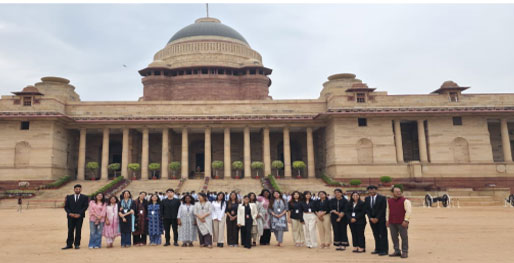
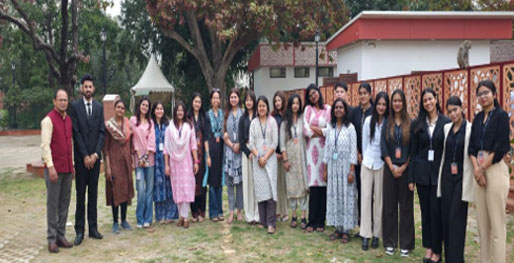
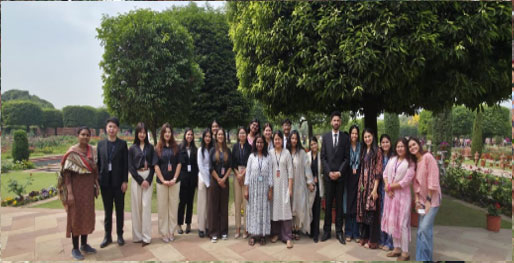
Brief of Educational Visit: The students of the Department of Sociology and Gender Studies undertook an educational visit to Rashtrapati Bhawan, New Delhi, to understand India’s democratic institutions, architectural heritage, and cultural symbolism. The group, consisting of students and faculty members, departed from the university at 09:40 AM. The visit began at the Forecourt, where students learned about its ceremonial role in state functions and official receptions. They were also informed about the symbolic importance of the national flag and other markers of authority. The tour included important spaces such as Durbar Hall, Ashoka Hall, Banquet Hall, Marble Hall, and Amrit Udyan. Students learned about the self-sustained nature of the Rashtrapati Bhawan estate, its diplomatic traditions, architectural planning, and the contributions of tribal artisans. The visit encouraged students to reflect on governance, representation, heritage, inclusivity, and the relationship between power, culture, and public institutions.
Learning Outcomes of Educational Visit:
- The visit enhanced students’ understanding of India’s democratic institutions, constitutional authority, and ceremonial traditions.
- It provided exposure to the architectural, historical, diplomatic, and cultural significance of Rashtrapati Bhawan.
- Students developed deeper awareness of inclusivity, indigenous craftsmanship, heritage preservation, and the symbolic role of national institutions.
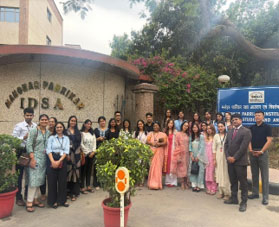
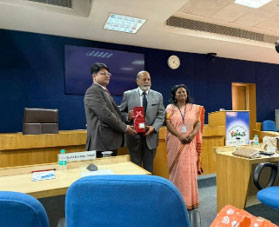
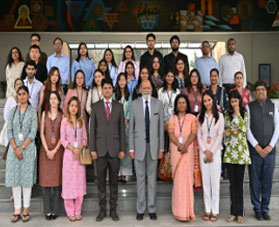
Title: Industry Visit to Manohar Parrikar Institute for Defence Studies and Analyses (MP-IDSA) and Interaction with DG Sujan R. Chinoy
Date and time: 01-April-2026/ 10:00 AM onwards
Location: Manohar Parrikar Institute for Defence Studies and Analyses (MP-IDSA)
No. 1, Development Enclave, Rao Tula Ram Marg, Delhi Cantonment, New Delhi – 110010
Brief about Organisation:
Manohar Parrikar Institute for Defence Studies and Analyses is an Indian think tank for advanced research in international relations, especially defence, strategic and security issues. It also provides training to civilian, military and police officers of the Indian government. Sujan R. Chinoy is the Director General of the Manohar Parrikar Institute for Defence Studies and Analyses (MP‑IDSA). A former Indian Ambassador and a distinguished strategic affairs expert, he specialises in geopolitics, national security, defence diplomacy, and Indo‑Pacific affairs. His insights combine diplomatic experience, military‑strategic understanding, and deep knowledge of global power transitions.
Brief of Visit and Industry interaction:
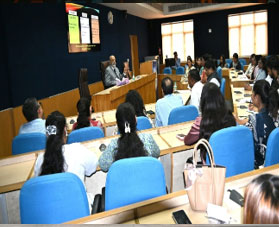
DG Sujan Chinoy delivered an in-depth session on the theme “World as We See Today”, structured around his conceptual 8Ts Framework—Trump, Technology, Trade, Territory, Terrorism, Talent, Trust, and Transparency. He explained how global geopolitics is shifting from pure military dominance to multi‑dimensional competition shaped by technology and trust deficits. He analysed the disruptive impact of Trump‑era policies, the evolving US–Iran–Israel dynamics, and the civilizational narrative shaping Iran’s domestic cohesion.
On India’s strategic posture, he emphasised “competitive coexistence” with China, multi-alignment over non-alignment, and India’s role as a net security provider in the Indian Ocean Region. He highlighted India’s focus on maritime security, supply‑chain resilience, and capacity‑building with smaller nations. The session offered nuanced perspectives on India’s diplomatic agility, strategic autonomy, and the sustainability of its balancing act in a polarised world.
Learning Outcomes:
Enhanced Strategic Understanding: Students gained a deeper appreciation of India’s evolving foreign policy—from non‑alignment to issue‑based alignment—and its implications for global diplomacy.
Clarity on India–China Dynamics: The concept of “competitive cooperation” helped participants understand the complexities of India–China relations beyond border disputes.
Exposure to Real‑World Geopolitics: The 8Ts framework provided a structured lens to analyse contemporary global disruptions, technological shifts, and trust deficits shaping international relations.
The Human Values and Community Outreach Club at Amity University, Noida, strives to cultivate empathy, social responsibility, and service among students. It promotes ethical values, teamwork, and community involvement through activities like awareness campaigns, volunteer drives, and educational programs. The club works to bridge societal gaps, support underprivileged communities, and provide a platform for students to contribute to social and environmental causes, fostering compassionate and socially aware leaders for the future.
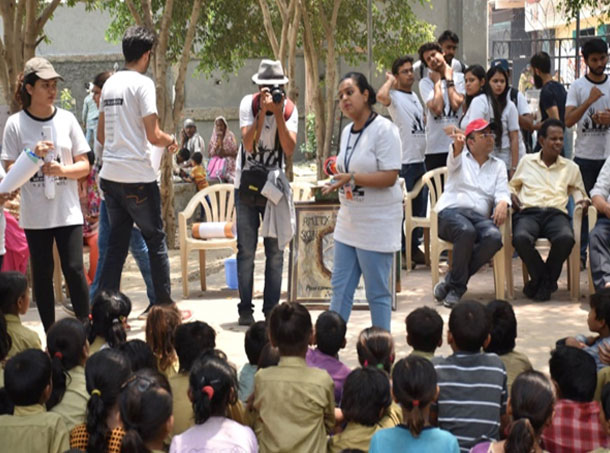
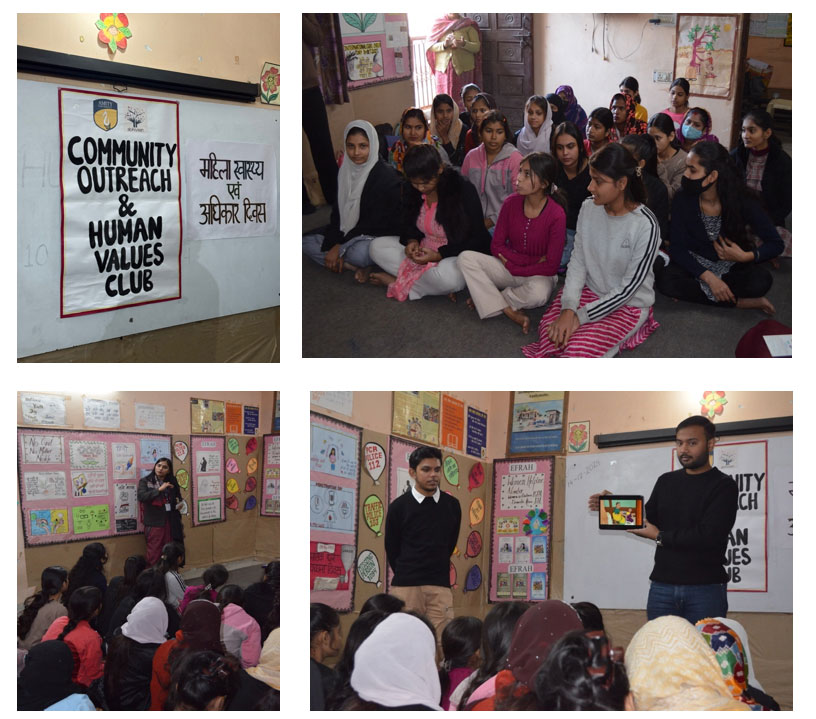
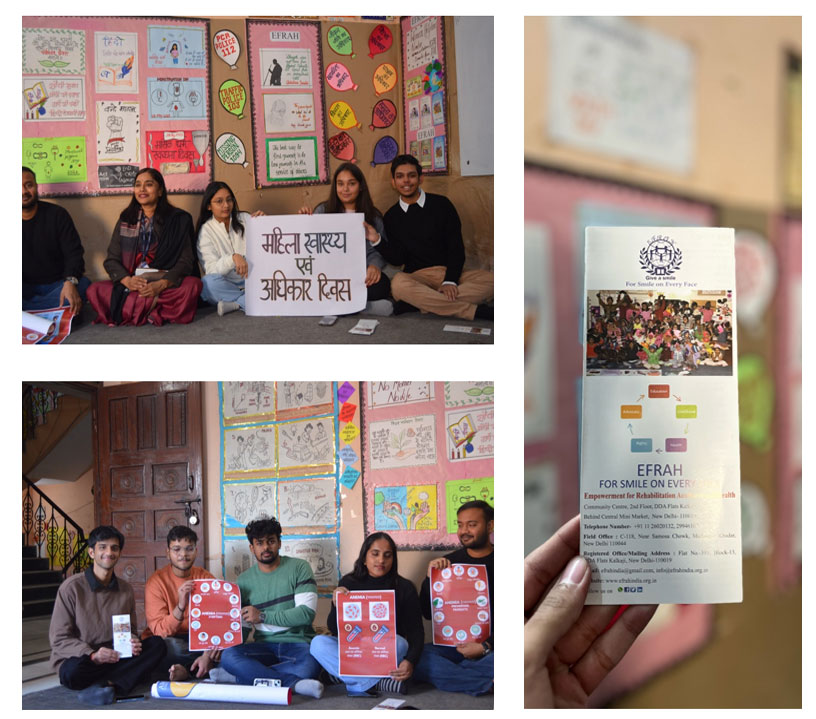
The Club organised a special event on Women’s Health and Human Rights Day in collaboration with EFRAH, an NGO based in Madanpur Khadar, on 14 December 2024. The office bearers of the club, along with the Faculty Coordinator, Dr. Nandini Sahay, and seven enthusiastic volunteers, visited the NGO to implement this initiative.
The visit successfully raised awareness among around 25 women aged 18-30 about their fundamental human rights emphasising the significance of Human Rights Day. The program also focused on educating women about ANEMIA, highlighting its symptoms, potential health implications, and effective preventive measures. This age group was chosen due to their critical role in shaping future generations and their vulnerability to social and health-related challenges.
The session covered essential topics such as the symptoms of anemia, its potential health implications, and practical preventive measures, including dietary improvements and regular health check-ups. To provide a comprehensive understanding of anemia, we played educational videos that highlighted its causes, symptoms, potential health implications, and preventive measures. In addition to the videos, we conducted an interactive session that involved the use of posters and a quiz to engage the audience.
The posters displayed key information about anemia, including tips for prevention through proper nutrition and lifestyle changes. These served as visual aids to reinforce the knowledge shared during the session. The quiz further enhanced the learning experience by testing the participants’ understanding of the topic in an enjoyable and participatory manner. It encouraged women to actively recall the information discussed and provided an opportunity for clarifying doubts. This approach not only made the session more dynamic but also helped foster a deeper connection with the attendees, ensuring the key messages resonated with them.
Through interactive sessions, videos, and quizzes, participants gained a deeper understanding of anemia’s symptoms, risks, and preventive measures. The program fostered active engagement, encouraged open discussions, and empowered women to prioritise their health. Overall, the initiative strengthened community outreach efforts, promoting informed decision-making and healthier lifestyles among the attendees.
The Human Values and Community Outreach Club has exciting plans for future activities aimed at making a positive impact. These include the “Jagriti” Workshop and Sensitization under the Beti Bachao Beti Padhao campaign, focusing on gender equality and the education of girls. The club will also organize Tree Plantation and Cleanliness Drives to promote environmental sustainability and awareness. Additionally, Inspiring Journeys: Panel Discussions with Exemplary Achievers will feature successful individuals who have contributed to their communities, inspiring others to follow their paths and overcome challenges.
The club also plans to visit communities to spread awareness about various social issues, further promoting active participation and social responsibility among students. These initiatives will encourage active participation, raise awareness, and foster social responsibility among students.
GLIMPSES OF THE EVENT
OUTREACH / EXTENSION ACTIVITIES
Social Work Students of Amity Institute of Social Sciences, Amity University, Noida participated inNational Mission for clean Ganga, Govt. of India Namami Gange Cleaning Drive at Kalindi Kunj Ghat, Delhi on April 6, 2019
Amity Institute of Social Sciences, Amity University in Association with United Nations Volunteers presents seminar on Role of Youth in Combating Climate Change & Water Scarcity on October 15, 2019
Swachhta Pakwada 2019 – Jal Shakti Village
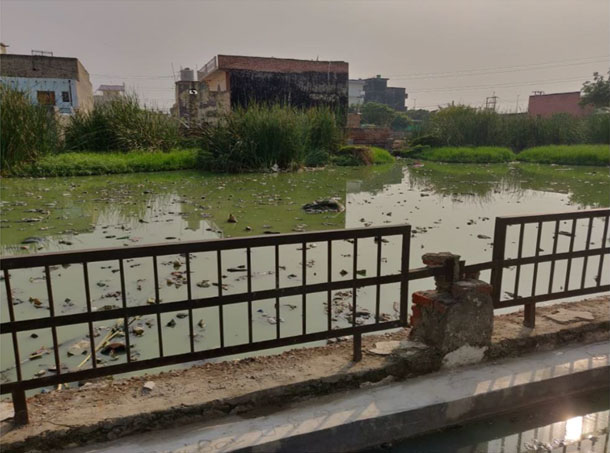
Jal Shakti Team of Amity University led by Prashant R Chauhan, Assistant Professor of Social Work, Amity University, Noida identified the Jal Shakti village Asgerpur, near Sector 128, Noida for water conservation awareness and preservation activities etc.
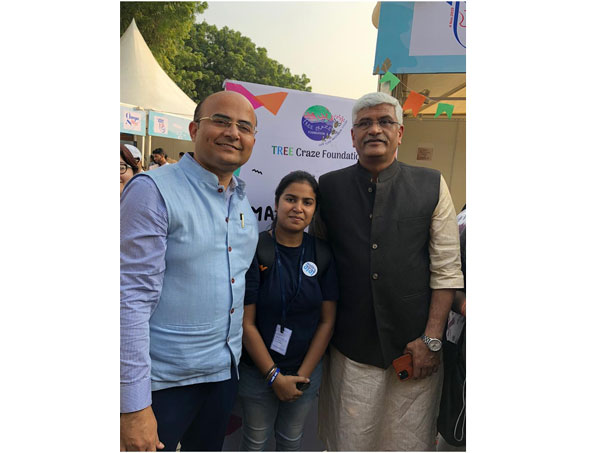
Hon’ble Minister of Jal Shakti Shri Gajendra Singh Shekhawat was apprised by Mr. Prashant Chauhan on water conservation initiatives during Ganga Utsav 2019 in New Delhi
Cleanliness Awareness Workshops were conducted in various primary schools of Noida by the Social Work Faculty along with students
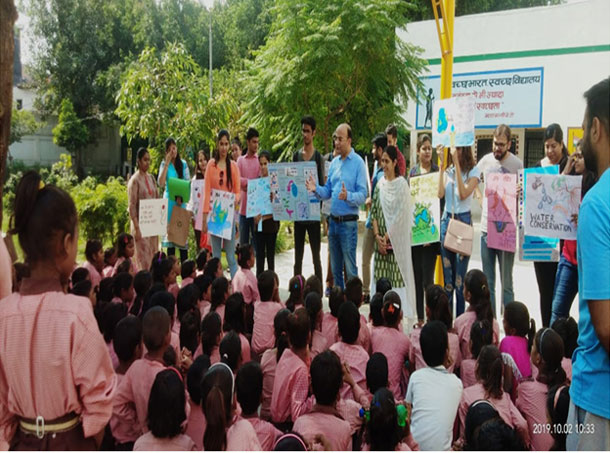
Social Awareness Campaign
Digital India Awareness Program – Community Center, Gejha-2018

Sensitizing community on cleanliness – Primary School, Gejha-2017
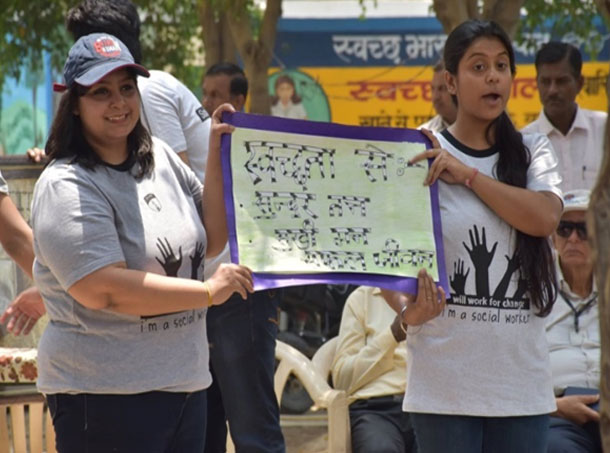
Sensitizing community on Cleanliness – Community Center, Bhanghel-2016
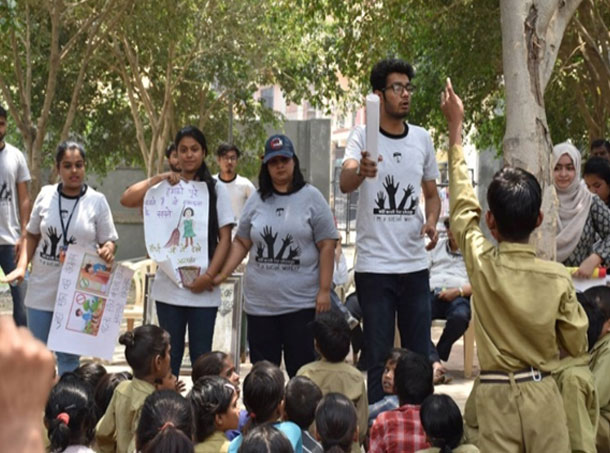
Child Abuse Awareness – Primary School, Gejha-2015