Mental Health & Academic Pressure: Creating Emotionally Safe, Student-Centric Institutions.

By Dr Kamini Tanwar, Associate Professor, Amity Institute of Clinical Psychology, Amity University, Gurugram
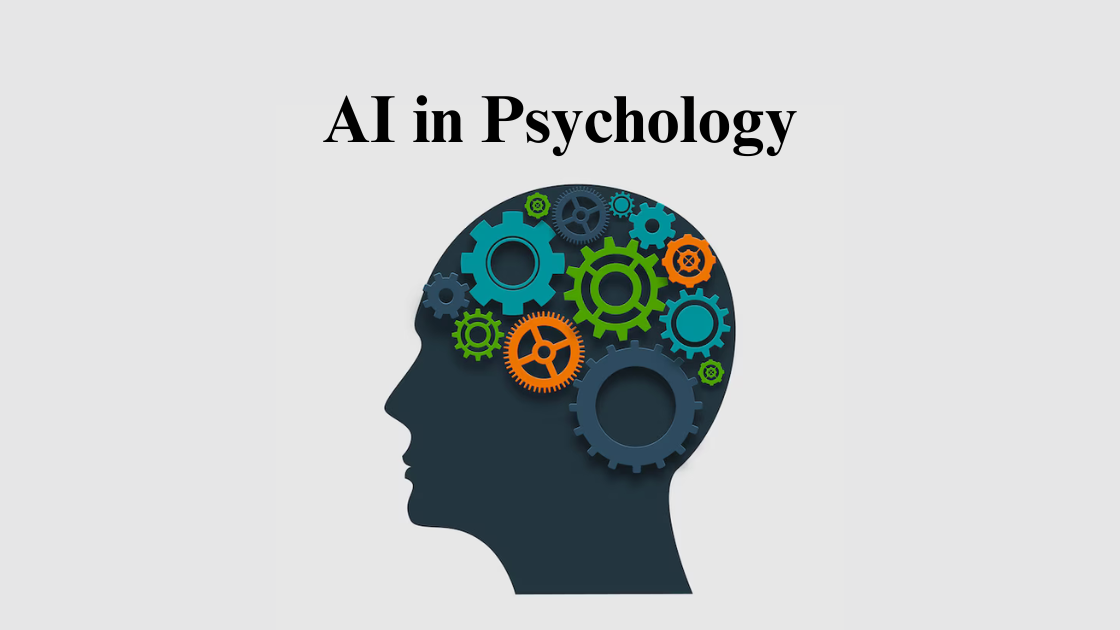
Introduction: Artificial intelligence (AI) has increasingly become an important part of contemporary psychological practice, particularly in the area of psychological assessment. Psychological assessment refers to the systematic process of collecting, analyzing, and interpreting information about an individual’s cognitive abilities, emotional functioning, personality traits, and behavioral patterns. Traditionally, this process has relied on standardized tests, structured and unstructured interviews, observations, and self-report measures administered and interpreted by trained professionals. While these methods remain central to psychological practice, they are often time-consuming, resource-intensive, and limited in their ability to capture dynamic and large-scale data. In recent years, AI has emerged as a promising tool to support and enhance psychological assessment practices across the world, including in the Indian context.
Artificial intelligence refers to computer systems designed to perform tasks that typically require human intelligence, such as learning from data, recognizing patterns, understanding language, and making predictions. In psychological assessment, AI systems commonly use machine learning algorithms, natural language processing, and data analytics to examine patterns in large datasets. These datasets may include questionnaire responses, speech samples, written text, facial expressions, digital behavior, or physiological data. By processing such information, AI-based systems can assist in identifying psychological traits, emotional states, and risk indicators with greater speed and consistency than many traditional methods.
Globally, AI is being integrated into psychological assessment in several ways. One of the most common applications is automated mental health screening. AI-powered tools are increasingly used to screen for conditions such as depression, anxiety, stress, and cognitive difficulties through online platforms and mobile applications. These tools analyze responses to questionnaires or patterns in language and behavior to provide preliminary assessments. Such systems are particularly useful in settings where mental health resources are limited, as they allow for early identification and referral without requiring immediate face-to-face contact with a professional.
Another important global application of AI in assessment involves the analysis of language and speech. Natural language processing enables AI systems to examine written or spoken language for indicators of emotional distress, thought patterns, or cognitive impairment. Research has shown that changes in word choice, sentence structure, speech rate, and emotional tone can be associated with psychological conditions such as depression or psychosis. AI-based language analysis offers a more objective and continuous form of assessment, especially when compared to single-session interviews.
AI is also increasingly used in behavioral and cognitive assessment through digital platforms. Reaction time tasks, memory exercises, attention-based games, and problem-solving tasks can be administered online, with AI algorithms analyzing performance patterns in detail. This allows for more precise measurement of cognitive functioning and can help detect subtle changes that may not be evident through traditional paper-and-pencil tests. In clinical settings, AI-supported decision systems are being developed to assist psychologists by integrating multiple sources of data and highlighting patterns relevant to diagnosis and treatment planning.
In the Indian context, the relevance of AI in psychological assessment is particularly significant. India faces a substantial mental health treatment gap due to its large population, limited number of trained mental health professionals, and unequal distribution of services between urban and rural areas. Many individuals do not receive timely assessment or intervention, leading to the worsening of psychological difficulties. AI-based assessment tools have the potential to address some of these challenges by increasing accessibility and reducing the burden on existing healthcare systems.
The rapid growth of smartphone usage and internet access in India provides an important foundation for AI-based psychological assessment. Mobile applications and online platforms can be used to administer screening tools in a cost-effective and scalable manner. Additionally, AI systems can be trained to work in multiple Indian languages, making assessment more inclusive for individuals who may not be comfortable with English-based tests. This linguistic adaptability is especially important in a culturally diverse country like India, where psychological distress is often expressed differently across regions and communities.
AI also offers opportunities for culturally sensitive assessment when developed using locally relevant data. Traditional psychological tests used in India are often adaptations of Western instruments, which may not fully capture culturally specific expressions of emotions, stress, or interpersonal difficulties. AI models trained on Indian datasets can potentially identify patterns that are more representative of local experiences, such as the tendency to express psychological distress through somatic symptoms or socially contextual concerns. However, this benefit depends heavily on the quality and representativeness of the data used to train these systems.
Despite its potential, the use of AI in psychological assessment raises important ethical and practical concerns, both globally and in India. Psychological data is highly sensitive, and the use of digital platforms increases the risk of privacy breaches and misuse of information. Ensuring informed consent, data security, and confidentiality is essential when using AI-based assessment tools. In India, where data protection laws are still evolving, these concerns require particular attention.
Another major concern is algorithmic bias. AI systems learn from existing data, and if this data is biased or unrepresentative, the resulting assessments may be inaccurate or unfair. In a country as diverse as India, AI tools developed using limited or urban-centric samples may fail to accurately assess individuals from rural, marginalized, or socioeconomically disadvantaged backgrounds. This highlights the need for careful validation and continuous monitoring of AI-based assessment tools.
Interpretability is another challenge associated with AI in psychological assessment. Many AI models function as “black boxes,” making it difficult to understand how specific conclusions or predictions are reached. In psychological practice, transparency is essential for ethical decision-making and for building trust with clients. Therefore, AI tools should be designed to provide clear and understandable explanations that can support, rather than replace, professional judgment.
It is also important to emphasize that AI should be viewed as an assistive tool rather than a substitute for psychologists. Psychological assessment involves not only measurement but also clinical insight, empathy, and ethical responsibility. AI can support psychologists by handling large volumes of data, identifying patterns, and improving efficiency, but final interpretations and decisions must remain with trained professionals.
Conclusion: Artificial intelligence is reshaping the field of psychological assessment by offering new ways to collect, analyze, and interpret psychological data. Globally, AI has enhanced screening, cognitive assessment, and behavioral analysis, while in India it holds particular promise for increasing accessibility and addressing resource limitations. However, the effective and ethical use of AI requires careful attention to cultural relevance, data quality, privacy, and professional oversight. When integrated responsibly, AI has the potential to strengthen psychological assessment practices and contribute to more accessible, accurate, and equitable mental health care.
**************************
What next?
Skills Required to be a Good Psychologist.
· Strong Communication Skills
· Patience
· Empathy and Compassion
· Ethical Judgment
· Observation Skills
· Research and Analytical Skills
Career Opportunities in Psychology.
· Clinical Psychologist
· Counselling Psychologist
· Industrial-Organisational Psychologist
· Forensic Psychologist
· Sports Psychologist
· Rehabilitation Psychologist
Relevant Courses in Clinical Psychology.
· B.A. (Applied Psychology) (Honours/Honours with Research)
· B.Sc. (Clinical Psychology) (Honours/Honours with Research)
· B.Sc. Clinical Psychology (Hons.)
· M.A. (Counselling Psychology)
· PG Diploma in Rehabilitation Psychology
***************************


Copyright © 2026 amity university | All rights reserved.