Mental Health & Academic Pressure: Creating Emotionally Safe, Student-Centric Institutions.


By: Kritika Ahuja, Assistant Professor, Amity Institute of Clinical Psychology, Amity University Gurugram
Introduction: In today’s highly competitive and fast-paced world, individuals are increasingly focused on academic success, personal achievements, and professional growth. While striving for excellence is essential, constant engagement with performance and productivity often comes at the cost of meaningful human relationships. Over a period, values such as compassion, empathy, patience, and emotional availability begin to take a back seat.
Human beings have an innate need to interact with others. Healthy interpersonal relationships provide emotional security and a sense of belongingness, which is identified as a fundamental need in Maslow’s hierarchy of needs. When relationships become superficial or emotionally distant, individuals often experience a sense of isolation. Over time, the absence of supportive connections can contribute to mental health concerns such as stress, anxiety, and depression.
Psychological research consistently highlights that emotional support and positive interpersonal relationships act as strong protective factors against mental health problems. Being heard, understood, and supported makes life feel lighter and more manageable. In contrast, a lack of compassion and emotional connection can intensify everyday stressors, leaving individuals feeling overwhelmed and disconnected. While communication plays an important role in our lives, what truly sustains relationships is the quality of connection guided by values such as empathy, compassion, and integrity.
Empathy allows us to understand another person’s perspective, compassion enables us to respond with care, and mutual support strengthens emotional well-being. Often overlooked yet deeply impactful acts like listening without judgment, offering reassurance, and being emotionally present can significantly enhance relational quality and promote mental health.
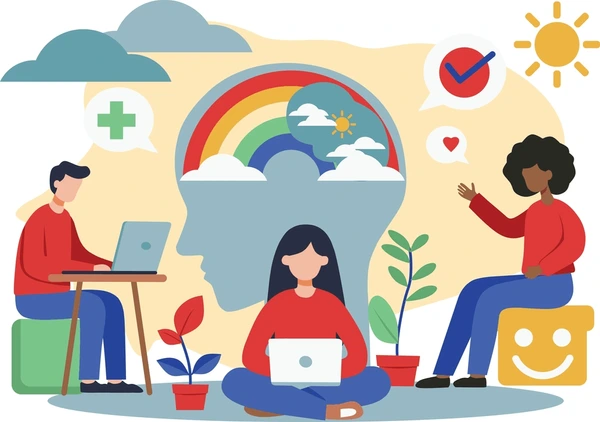
In a world where individuals often face pressures in isolation, there is a growing need to hold hands emotionally and psychologically. Creating a culture of support, where people feel safe to express vulnerability and seek help, fosters collective growth and emotional resilience. Promoting compassionate relationships is not a sign of weakness; rather, it is the foundation of sustainable mental well-being.
Imagine a world where people pursue their goals while remaining sensitive to the feelings, emotions, and experiences of others. Such awareness would have a direct and positive impact on both mental and physical health. Even if a small percentage of individuals begin to understand that many conflicts stem from past experiences, unresolved hurt, or unmet emotional needs, meaningful change can begin. If one is able to recognise aggression as a possible expression of pain and respond with compassion instead of reaction, it reinforces the belief that the world can be a safer and more understanding place. This experience not only comforts the other person but also encourages self-reflection. Choosing to reflect and grow is a courageous step. When individuals move forward together by sharing burdens, offering understanding, and extending support, both individual well-being and collective mental health flourish.
************************
What next?
Skills Required to be a Good Psychologist.
· Strong Communication Skills
· Patience
· Empathy and Compassion
· Ethical Judgment
· Observation Skills
· Research and Analytical Skills
Career Opportunities in Psychology.
· Clinical Psychologist
· Counselling Psychologist
· Industrial-Organisational Psychologist
· Forensic Psychologist
· Sports Psychologist
· Rehabilitation Psychologist
Relevant Courses in Clinical Psychology.
· B.A. (Applied Psychology) (Honours/Honours with Research)
· B.Sc. (Clinical Psychology) (Honours/Honours with Research)
· B.Sc. Clinical Psychology (Hons.)
· M.A. (Counselling Psychology)
· PG Diploma in Rehabilitation Psychology
***************************

Copyright © 2026 amity university | All rights reserved.