AI Technology & Future Skills

By Dr Akshay Mudgal, Assistant Professor, Amity School of Computer Science and Engineering, Amity University Gurugram
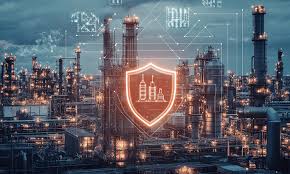
Introduction: Modern society depends on a vast network of interconnected systems that operate quietly in the background. Power grids, water supply systems, transportation networks, healthcare facilities, and communication services form what is known as critical infrastructure. These systems are essential for public safety, economic stability, and national security. As they become increasingly digitized and connected, protecting them from cyber threats has become a major challenge. Cybersecurity for critical infrastructure is no longer just a technical issue—it is a societal necessity.
Critical infrastructure systems were traditionally designed to prioritize reliability and physical safety rather than cybersecurity. Many industrial control systems, such as Supervisory Control and Data Acquisition (SCADA) and Distributed Control Systems (DCS), were originally isolated from external networks. However, the adoption of digital technologies, remote monitoring, and Internet-based communication has connected these systems to corporate networks and the cloud. While this connectivity improves efficiency and visibility, it also exposes infrastructure to cyber risks.
Cyber attacks on critical infrastructure can have severe real-world consequences. Unlike attacks on personal computers or websites, disruptions to infrastructure systems can lead to power outages, water contamination, transportation failures, or compromised healthcare services. Even a short interruption can affect millions of people. These risks make cybersecurity in this domain particularly complex and high-stakes.
One of the key challenges in securing critical infrastructure is the convergence of information technology (IT) and operational technology (OT). IT systems manage data, communication, and business processes, while OT systems control physical processes such as electricity flow, water treatment, or train signaling. OT environments often rely on legacy hardware and software that were not designed with modern security principles in mind. Updating or replacing these systems is difficult because they must operate continuously and safely.
Another challenge is the increasing use of remote access and automation. Engineers and operators often need to monitor systems from remote locations, especially in large or geographically distributed infrastructure networks. While remote access improves operational efficiency, it also creates additional entry points for attackers if not properly secured.
Cyber threats to critical infrastructure come from a variety of sources, including cybercriminals, hacktivists, and state-sponsored actors. The motivations range from financial gain and political influence to espionage and sabotage. Attacks may involve malware, ransomware, denial-of-service attacks, or manipulation of control systems. In some cases, attackers aim to disrupt services; in others, they may seek to remain undetected while gathering sensitive information.
To address these risks, cybersecurity strategies for critical infrastructure must focus on prevention, detection, and resilience. Prevention involves reducing vulnerabilities through secure system design, network segmentation, and strong access controls. Detection focuses on monitoring systems to identify abnormal behavior or intrusions early. Resilience ensures that systems can continue operating or recover quickly even if an attack occurs.
Some commonly adopted
cybersecurity practices for critical infrastructure include:
A particularly important principle in this context is defense in depth. Instead of relying on a single security measure, multiple layers of protection are deployed across devices, networks, and applications. If one layer fails, others remain in place to reduce the impact of an attack.
Human factors also play a significant role in infrastructure security. Operators, engineers, and administrators must be trained to recognise cyber threats and follow secure practices. Phishing attacks, weak passwords, and misconfigurations remain common causes of security incidents. Building a strong cybersecurity culture within organisations that manage critical infrastructure is just as important as deploying technical solutions.
Regulatory frameworks and standards play a key role in guiding cybersecurity efforts. Many countries have introduced policies and guidelines that define security requirements for critical infrastructure operators. International standards such as those for industrial control system security provide structured approaches to risk management, incident response, and system protection. For students and faculty, these standards offer valuable insights into how cybersecurity principles are applied in real-world, high-risk environments.
Emerging technologies are both a challenge and an opportunity for critical infrastructure security. Technologies such as the Internet of Things, cloud computing, and artificial intelligence introduce new vulnerabilities, but they also enable better monitoring and predictive security. For example, AI-based systems can analyse large volumes of operational data to detect anomalies that may indicate cyber intrusions or system faults.
Despite ongoing efforts, securing critical infrastructure remains an evolving challenge. Many systems have long lifespans, sometimes spanning decades, which makes rapid modernisation difficult. Budget constraints, skill shortages, and coordination between public and private stakeholders further complicate the landscape. These challenges highlight the need for continued research, collaboration, and education.
For students and educators, cybersecurity for critical infrastructure provides a powerful example of how technology, policy, and society intersect. Studying this area helps learners understand the real-world impact of cybersecurity decisions and the importance of designing systems that prioritise safety, reliability, and resilience. It also opens pathways to careers in industrial cybersecurity, risk management, and national security.
In conclusion, critical infrastructure forms the backbone of modern life, and its protection is essential for societal well-being. As these systems become more connected and digital, cybersecurity must be integrated into every stage of their design and operation. By combining technical safeguards, organisational practices, and regulatory support, it is possible to build infrastructure systems that are not only efficient but also secure and resilient. For the next generation of professionals, understanding cybersecurity in this context is not optional—it is fundamental.
******
Copyright © 2026 amity university | All rights reserved.