AI Technology & Future Skills

By Dr Shweta Sinha, Professor, Amity School of Computer
Science & Engineering, Amity University Gurugram
Introduction:
As Artificial Intelligence leaps from
the pages of science fiction directly onto our study desks, students in schools
are finding that interactions with a chatbot are becoming as common as a quick
Google search. These tools can simplify a messy physics concept; it also brainstorms
a plot twist for a creative writing assignment and extend to the level of summarising
a long chapter in seconds. However, along with these benefits comes an
important question: “How should we use AI responsibly?” As we create
space for these assistants in our lives, we must adopt a new mindset, i.e.,
viewing AI as a co-pilot, not an autopilot. In aviation, the pilot remains the
ultimate authority, responsible for the safety and direction of the flight,
while the co-pilot provides data, handles repetitive tasks, and assists with
navigation. This partnership in human life is the heart of modern digital
citizenship. Being a responsible digital citizen means using technology in a
way that is safe, ethical, and thoughtful. While it is tempting to treat a
chatbot like a perfect source of facts, the truth is that AI does not
understand things the way humans do. It is simply a pattern-matching machine
that can sometimes be wrong and be confident. It can offer outdated facts or
carry hidden biases from the data it was trained on. To use AI responsibly, we
must think of it is as a learning assistant that is designed to help us get
started, not a replacement for our own critical thinking.
Responsible AI begins with
understanding how to use tools honestly and thoughtfully. An essential part of
digital citizenship is to develop the ability to look at an AI’s answer and think
and ask, "Is this actually a true response?" Because AI can
sound very professional even when it is hallucinating or cooking something of
its own. AI learns from human-created data, it may reflect human opinions,
stereotypes, or sometimes, incomplete viewpoints. Responsible students must act
like digital detectives. This involves verifying facts in trusted textbooks,
comparing different sources, and checking for prejudice. For example, if you
ask an AI about a historical event, it might only provide one perspective. By
asking follow-up questions like, "What are the other viewpoints on
this?" you become an active learner rather than a passive receiver of
information. It is desirable to think of AI like a calculator for an essay,
as it can help with the mechanics, but the original thoughts, personal voice,
and final polish must belong to the student.
Privacy and data safety form the security
pillar in the age of chatbots. While chatting with an AI can feel as casual as
texting a friend, it is essential to remember that these platforms are public
digital spaces. Every time a student shares a personal story, a school name, or
a home address, that data is stored and may be used to train future models. In
simple words, if you do not want the information on a physical notice board in
your school for everyone to see, you should not type it into an AI prompt. Responsible
use is about maintaining firm boundaries and understanding that every
interaction leaves a permanent digital footprint.
Education is not only about producing
assignments, but also about developing thinking, creativity, and personal
expression. Ultimately, the goal of integrating AI into education is to make us
better thinkers, not a robot to respond fast. In future, the most successful
individuals will not be those who simply know how to use AI, but those who know
how to supervise it. Classroom activities, such as taking an AI-generated
paragraph and hunting for its errors or biases help prove that technology is
only as effective as the human guiding it. When we use AI responsibly, we focus
on reflection and human judgment. Instead of just looking for the right answer,
we ask ourselves, "What did I learn from this process?" and "How
did I make this better?" By balancing curiosity with a healthy dose of doubt,
we ensure that we remain the masters of the tools we use. The future belongs to
those who use technology with integrity and heart, keeping unique human
qualities like empathy, creativity, and moral judgment at the centre of their
digital lives.

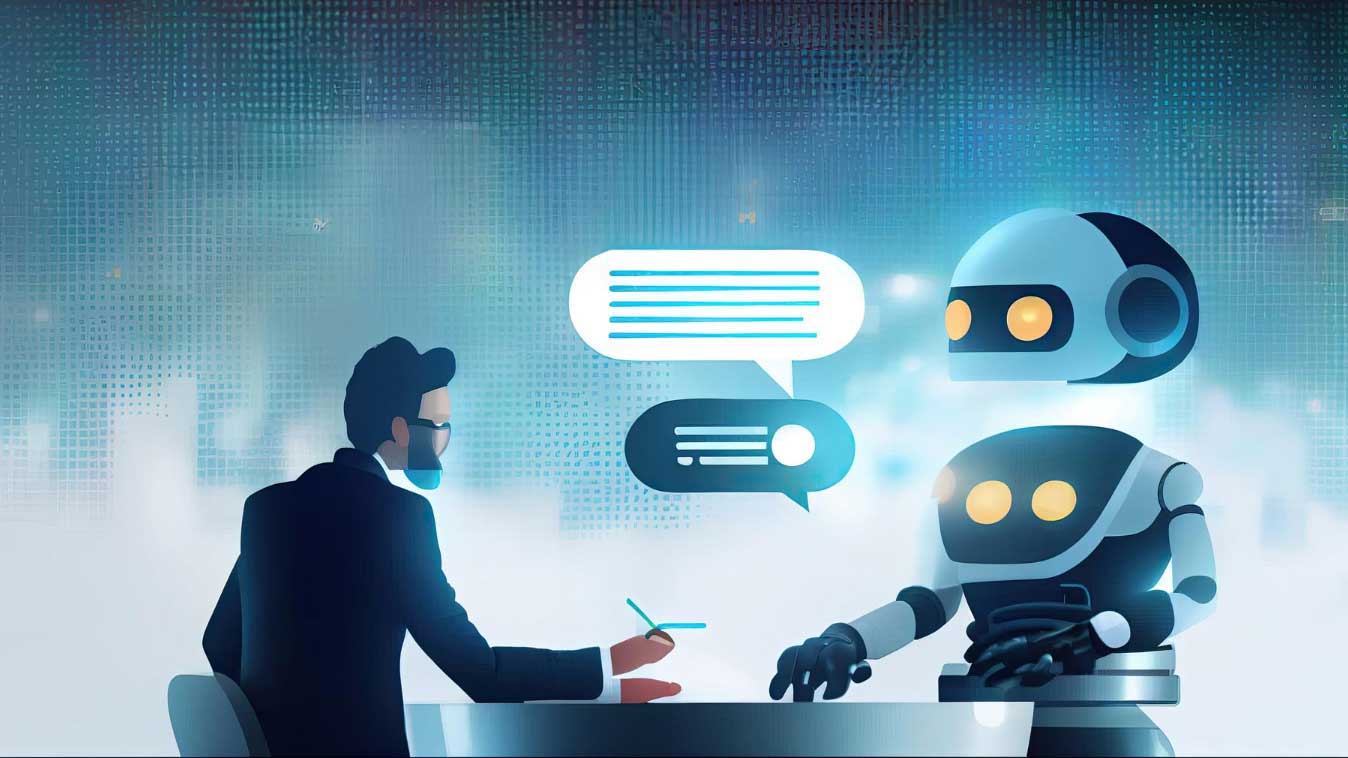
A block diagram showing communication with ChatBot. The figure highlights the core of the complete process as Student Thinking and Review.
******
Copyright © 2026 amity university | All rights reserved.