AI Technology & Future Skills

By: Dr Monika Arora, Professor and Head of the Department, Amity Business School, Amity University Gurugram
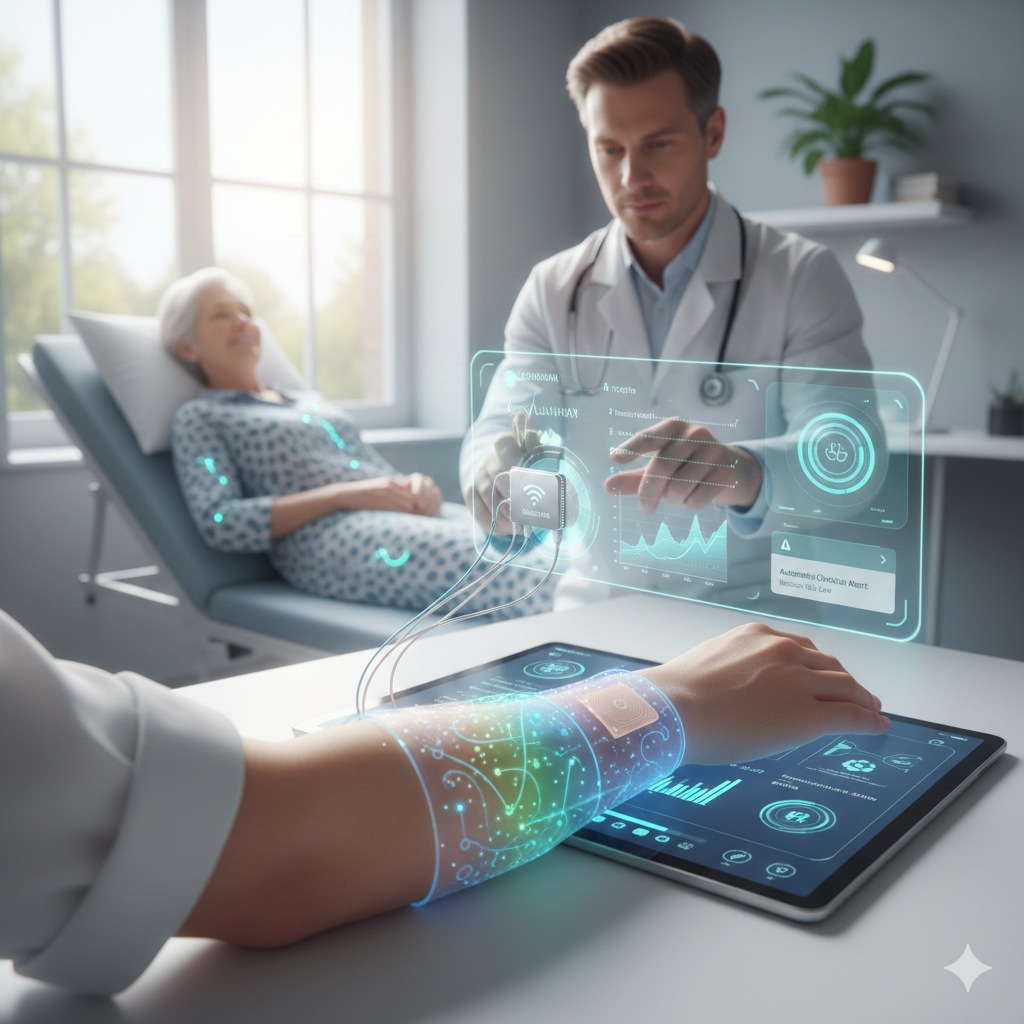
Introduction: The Internet of Things (IoT) and sustainable smart materials present a revolutionary opportunity for healthcare monitoring systems. Convergence in sustainable healthcare monitoring systems has been significantly influenced by smart technology use and convergence. Traditional monitoring equipment uses a lot of energy, has little flexibility, and has lower patient compliance. Long-term usability is a constraint that the user wants to consume and use. By enhancing patient comfort, reducing energy demands, and facilitating remote monitoring that minimises hospital visits, the study's findings signify the improvement of sustainable solutions.
Finally, by offering practical health insights, IoT-driven data analytics improve clinical decision-making. In addition to identifying future research avenues towards scalable, environmentally friendly, and patient-centric healthcare monitoring solutions, this paper adds to the expanding conversation on sustainable healthcare technologies by highlighting the synergies between IoT connectivity and material intelligence.
Keywords: Smart materials, Internet of Things, sustainable systems, health monitoring systems.
The integration of Internet of Things (IoT) in healthcare represents one of the most revolutionary transformations in modern medicine, fundamentally changing how patient care is delivered, monitored, and managed. The global IoT healthcare market is projected to reach $534.3 billion by 2025, with the IoT medical devices market alone expected to grow to $815.21 billion by 2033, demonstrating a remarkable compound annual growth rate of 29%.
The Core Components of IoT healthcare systems, also referred to as the Internet of Medical Things (IoMT), encompass a network of connected medical devices and applications that communicate with healthcare IT systems through online networks. These systems consist of medical devices equipped with Wi-Fi connectivity that enable machine-to-machine communication, which forms the foundation of IoMT functionality. The key components include sensors, microcontrollers, wireless communication modules, and cloud-based data storage and analysis platforms. Popular hardware implementations utilize Arduino microcontrollers, ESP8266 Wi-Fi modules, and various sensors including heartbeat monitors, temperature sensors, and pulse oximeters. The Primary Applications and Use Cases can be used and considered as under:
Remote Patient Monitoring: Remote patient monitoring represents the most common application of IoT in healthcare, enabling continuous tracking of vital signs such as heart rate, blood pressure, blood glucose levels, and oxygen saturation. The Federal Communications Commission estimates that RPM combined with electronic health records could save the healthcare industry up to $700 billion over the next two decades.
Chronic Disease Management: IoT devices excel in managing chronic conditions like diabetes, hypertension, and heart disease through continuous real-time monitoring and early intervention capabilities. Smart devices can automatically track medication adherence, with studies showing that medication non-adherence accounts for 50% of treatment failures and up to 25% of hospitalizations annually.
Wearable Health Technology: Modern wearable devices have evolved beyond simple fitness trackers to sophisticated medical monitoring tools. These devices now include smartwatches, fitness bands, sensor-embedded clothing, and medical-grade wearables that provide continuous health tracking, real-time feedback, and integration with mobile health applications. Advanced wearables can perform multiple functions including monitoring, screening, detection, and prediction of health conditions.
Smart Hospital Infrastructure: Hospitals implement IoT for environmental monitoring, asset tracking, equipment management, and patient flow optimization. IoT sensors monitor temperature, humidity, air quality, and contamination levels in critical areas like operating rooms and medication storage facilities. Smart infusion pumps with IoT connectivity enable remote monitoring and adjustment of medication delivery, incorporating safety features to prevent dosing errors.
Due to heath infrastructure and limited resources, this has become a need of an hour to utilise the minimum paramedical staff and smart and IOT devices has enhanced over the time. The use of technology has strengthen the power in medical industry in multiple dimension and that is discussed in this research.
Smart Materials in Healthcare.
Smart materials are group of materials with specific properties that can be altered in a controlled fashion by stimuli such as temperature, moisture, pH, or electric/magnetic field (Herrmann et al., 2025). Examples include shape memory alloys and polymers, piezoelectric materials, and pH-sensitive polymers (Badami et al., 2014). Smart materials have the potential to revolutionize healthcare through the development of self-healing implants, wound healing scaffolds, drug delivery systems, and the integration with emerging technologies like 3D printing and gene editing (Aamir & Shaikh, 2015; Lyu et al., 2021).
IoT in Healthcare.
The Internet of Things (IoT) plays a crucial role in healthcare by enhancing the accuracy, reliability, and efficiency of medical equipment and services through computerized systems. IoT applications in healthcare include patient-focused systems that monitor health status and environments, providing alerts and recommendations for various health issues. The integration and advancements of IoT in healthcare include miniaturized technology and wearable devices, revolutionizing healthcare operations and clinical trials , and enabling early diagnosis and health status analysis .
Integration Studies.
Smart devices connected through the Internet of Things (IoT) are transforming healthcare by improving operational efficiency, clinical trial quality (Singh, 2022), and optimizing healthcare costs . Applications range from patient monitoring and weight management to stroke rehabilitation and glucose monitoring (Tank & Bulsara, 2023). In hospitals, IoT devices enable continuous patient monitoring and provide a time-saving, cost-efficient strategy during lockdowns. Overall, IoT-based healthcare solutions offer significant benefits and face challenges related to technology and security.
INTEGRATION WITH ARTIFICIAL INTELLIGENCE.
The convergence of IoT with AI-powered analytics enables predictive healthcare through pattern recognition and anomaly detection. Machine learning algorithms analyze vast datasets from IoT devices to predict potential health issues and recommend interventions before conditions worsen.
5G Technology Enhancement.
The integration of 5G technology promises ultra-low latency and high-speed connectivity, enabling real-time data streaming for critical applications like remote surgery and immediate diagnostic decision-making. This advancement will support more sophisticated IoT applications in healthcare delivery.
Benefits of IoT Healthcare Integration
Enhanced Patient Monitoring and Early Detection.
IoT allows around-the-clock continuous observation that would have identified the presence of minor changes in the patient conditions that would otherwise have remained unrecognized. This will result in early diagnosis and timely treatment of disease, disease prevention, and positive patient outcomes.
Improved Operational Efficiency.
Healthcare facilities can gain access to efficient resource distribution, lower medical errors, as well as simplified work processes. IoT automates the mundane activities like data gathering and identifying patients and also lessens the workload of the healthcare personnel and also minimizes the role of human error.
Cost Reduction.
The integration saves money on healthcare by lowering the number of visits in a hospital, enhancing resource use, and avoiding emergency circumstances. Remote monitoring ensures that the patients are not taken to the hospitals but at the same time, the care they receive remains high and therefore the total healthcare cost would be minimal.
Personalized Medicine.
Data generated by IoT can help healthcare practitioners make individualized treatment regimes based on the needs of a patient. Real-time treatment changes are possible with continuous monitoring of chronic conditions and treatment according to the specifics of the patient.
Enhanced Access to Care.
IoT has promoted telemedicine and virtual care delivery enabling healthcare services to be made accessible to patients in remote locations or even those with mobility challenges. The technology turned out to be especially useful during the COVID-19 pandemic in order to ensure continuity of care and lessen the risk of exposure.
Challenges in Implementation are numerous, the few that can be taken into account are as follows:
CONCLUSION.
The healthcare sector is fundamentally changing with the implementation of IoT in medical care because it allows delivering care in a more proactive, efficient, and patient-centered way. With the ever-increasing sophistication in technology, the possibilities of IoT to enhance health outcomes at a lower cost put it as a pillar of future healthcare system. The continued creation of more advanced devices, improved connectivity and AI-based analytics are also expected to continue to transform patient care and medical practice in the coming years.
************
What next?
Skills Required to be a Good Businessperson?
· Communication skills
· Decision-making ability
· Financial literacy
· Leadership qualities
· Time management
· Networking skills
Career Opportunities in Business?
· Entrepreneurship
· Marketing & Sales
· Finance & Banking
· Human Resource Management (HR)
· Business Consulting
· International Business
Relevant Courses in Amity Business School?
· BBA (Banking & Finance) (Honours/Honours with Research)
· BBA (Business Analytics) (Honours/Honours with Research)
· BBA (Digital Marketing) (Honours/Honours with Research)
· BBA (Fashion Business Management) (Honours/Honours with Research)
· BBA (Honours/Honours with Research)
· BBA (Hospital and HealthCare Management) (Honours/Honours with Research)
· B.Com. (Honours/Honours with Research)
· Doctor of Philosophy (Economics)
· Executive MBA (Sustainability Management)
· MBA
· MBA (Hospital & Healthcare Management)
· MBA (Sustainability Management)
· MBA - Executive (for working Professionals)
· M.Com.
· Ph.D. in Economics (Part Time)
*******************
REFERENCES:
Aamir, M., & Shaikh, M. (2015). International Journal of Emerging Technologies in Computational and Applied Sciences (IJETCAS) www.iasir.net Smart Materials & its Applications. www.iasir.net
Alqudah, A. M. (2019). The Internet of Things in Healthcare: A survey for Architecture, Current and Future Applications, Mobile Application, and Security. JOIV : International Journal on Informatics Visualization, 3(2), 113–122. https://doi.org/10.30630/JOIV.3.2.227
Badami, V., Ahuja, B., Deng, M., Kinoshita, Y., & Wang, J. (2014). Biosmart Materials: Breaking New Ground in Dentistry. The Scientific World Journal, 2014(1), 986912. https://doi.org/10.1155/2014/986912
F Carnaz, G. J., & Nogueira, V. (n.d.). An Overview of IoT and Healthcare.
Gashi, I., & Kabashi, F. (n.d.). Internet of Things (IoT) in Healthcare Internet of Things (IoT) in Healthcare Internet of Things (IoT) in Healthcare. Retrieved October 4, 2025, from https://knowledgecenter.ubt-uni.net/conference
Herrmann, I., Li, Z. A., Bahal, R., & Conde, J. (2025). Translating nanomedicines from the lab to the clinic. Cell Reports Physical Science, 6(2), 102357. https://doi.org/10.1016/J.XCRP.2024.102357
Kawale, S. R., Narmadha, D., Nancy, R. G., Mule, S. B., Verma, B. K., & Reddy, P. C. S. (2022). Internet of medical things. International Journal of Health Sciences, 6(S3), 10520–10531. https://doi.org/10.53730/IJHS.V6NS3.8359
Lyu, Q., Gong, S., Yin, J., Dyson, J. M., & Cheng, W. (2021). Soft Wearable Healthcare Materials and Devices. Advanced Healthcare Materials, 10(17), 2100577. https://doi.org/10.1002/ADHM.202100577
Mohammed, C. M., & Askar, S. (n.d.). Machine Learning for IoT HealthCare Applications: A Review. https://doi.org/10.5281/ZENODO.4496904
Rghioui, A., & Oumnad, A. (2018). Challenges and Opportunities of Internet of Things in Healthcare. International Journal of Electrical and Computer Engineering (IJECE), 8(5), 2753–2761. https://doi.org/10.11591/ijece.v8i5.pp2753-2761
Saeed, R. H., Dino, H. I., Haji, L. M., Hamed, D. M., Shukur, H. M., & Jader, O. H. (n.d.). Impact of IoT Frameworks on Healthcare and Medical Systems Performance. https://doi.org/10.5281/ZENODO.4423394
Singh, G. (Guddi). (2022). Implementation of IoT for Disease Detection and Prevention. International Journal of Health Sciences, 6(III), 8122–8129. https://doi.org/10.53730/IJHS.V6NS3.7940
Tahir, N., Ijaz, H., Niazi, M., & Danial Khalid, M. (2016). The Smart Future; Innovations in Materials. International Journal of Sciences: Basic and Applied Research (IJSBAR) International Journal of Sciences: Basic and Applied Research, 30(4), 172–181. http://gssrr.org/index.php?journal=JournalOfBasicAndApplied
Tank, B. V, & Bulsara, M. S. (2023). Iot Based Remote Healthcare Monitoring System. 8, 1188. www.ijrti.org
***************
Copyright © 2026 amity university | All rights reserved.